What does EN 17235:2024, the successor to EN 795, bring?
In practical terms, what does EN 17235:2024 cover? The new standard merges the content of EN 795 (for permanent anchors) and EN 517 (prefabricated roof safety hooks). As a result, EN 517 has been withdrawn entirely. Only temporary devices (types B and E of the former EN 795) remain within the scope of EN 795.
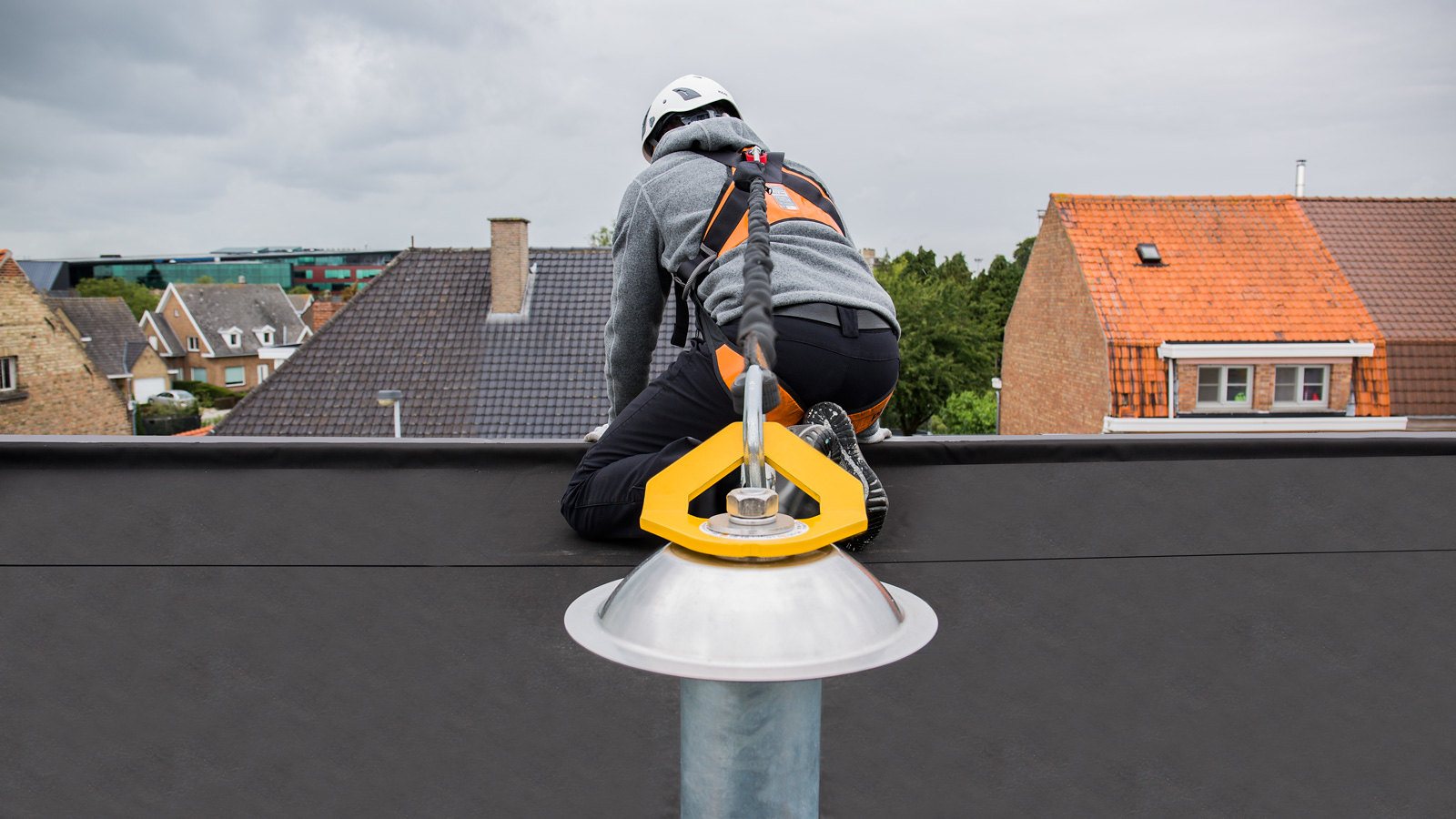
The rule is now simple: anything permanently fixed to a building falls under EN 17235:2024.
EN 17235:2024 is the new European standard for permanent (integrated into the structure) anchors, lifelines and their components. In force since 6 February 2026, it has brought fundamental changes and new legal obligations to the work at height and fall arrest systems sector.
Products certified to EN 17235:2024 become eligible for CE marking after assessment by a notified body, based on the Declaration of Performance (DoP) prepared by the manufacturer. This means products can be placed on the market across Europe without any additional national procedure, which progressively makes national technical approvals for permanent products (ETA and abZ in Germany) obsolete. For a buyer or specifier, it finally becomes possible to compare two systems on equal terms.
EN 17235:2024 also places emphasis on long-term durability. It requires compliance with criteria for durability and corrosion resistance. These aspects matter for site safety not only at installation, but throughout the service life of the building.
Compared with previous practice (EN 795:2012 in particular), the main innovations, features and differences introduced by EN 17235:2024 are:
1. A “Complete System” Approach, Not a Single Part
- Previously: Anchor devices could be tested and approved as a single part (component).
- New: EN 17235:2024 requires products to be tested not on their own but as an integrated kit/system, together with the fixings (screws, bolt sets, anchors) and the substrate they are installed on (concrete, steel, timber, etc.), giving an assessment far more consistent with real-world performance.
2. Construction Products Regulation (CPR) and Mandatory CE Marking
- Legal status: EN 17235:2024 has been brought under the Construction Products Regulation (EU 305/2011 – CPR).
- Obligations: Manufacturers will now be required to issue a Declaration of Performance (DoP) for these permanent systems and to affix the CE marking to their products. Because the former permanent anchor standards (EN 795 Types A, C, D) remained under the PPE regulation, CE marking harmonisation was problematic; this issue now disappears.
3. New Kit Classification
Instead of the former letter types (A, B, C, D), systems are classified into 4 integrated kit groups according to their intended use:
- Kit A: describes fixed, single permanent anchor points to which a maximum of 2 users can connect.
- Kit B: describes roof safety hooks for a maximum of 2 persons, designed both as a PPE anchorage point and for securing roof ladders (it also incorporates the former EN 517 standard).
- Kit C: describes flexible (steel cable) horizontal lifelines to which a maximum of 4 users can connect at the same time.
- Kit D: describes rigid (rail) horizontal lifelines to which a maximum of 4 users can connect at the same time.
4. More Demanding Test and Durability Criteria
- Static and dynamic tests: Static load tests of 12 to 15 kN depending on the material (12 kN for metals and 15 kN for non-metallic materials) and 2-metre dynamic drop tests with a 100 kg mass have been made mandatory (for certain parameters there are destructive test loads that push the system to its limits). There must be no damage or breakage in the free-fall test.
Minimum arrest force: 9 kN for 1 person (6 kN x 1.5 safety factor), 10.5 kN for 2 persons, 12.0 kN for 3 persons and 13.5 kN for 4 persons
- Corrosion and sealing: Much stricter corrosion resistance and watertightness requirements have been integrated for these structures, which remain permanently on the roof or outdoors.
Marking must include: the manufacturer’s name or brand, product name / identification number, type designation (for example Kit A, B, C, D), the maximum number of persons who can use it at the same time, year of manufacture, the relevant standard (EN 17235:2024) and the breaking load or static test values.
5. Transition Period
- Deadline: A transition period until 9 August 2027 has been set for the sector to adapt to the new standard.
- Existing installations: Existing systems installed and verified under the previous rules before this date do not need to be removed or replaced. However, all new permanent systems placed on the market after August 2027 are legally required to comply with EN 17235:2024.
Summary Comparison Table
| Feature | Previous (EN 795:2012 / EN 517) | New (EN 17235:2024) |
|---|---|---|
| Scope | All PPE anchor devices (temporary and permanent mixed) | Permanent (fixed to the structure) systems only |
| Legislation | Covered by Personal Protective Equipment (PPE) rules | Construction Products Regulation (CPR) |
| CE marking | Not harmonised for permanent devices (grey area) | Mandatory CE marking and Declaration of Performance (DoP) |
| Assessment | Component/part-based testing | Testing focused on the complete system and substrate connection |
| Roof hooks | Covered by a separate standard (EN 517) | Included in this standard as Kit B |